
The following guide covers:
The most common compliance training
Why is compliance training important for your organization?
How Uteach makes compliance training management easier
Many organizations see compliance training as a box to tick. Employees, on the other hand, often try to avoid it at all costs. Yet it takes only one overlooked rule, one careless action, to trigger a fine worth thousands or expose your team to serious safety risks.
That is why you do not want to treat compliance training as an afterthought. In this article, we will break down what compliance training really is, why it is so important for your organization, and how you can deliver it in a way that is both easy to manage and enjoyable for employees to complete.
What is compliance training?
Compliance training is a structured program that teaches employees the specific policies, procedures, and behaviors required to operate within legal, ethical, and company standards. These policies are often driven by government regulations, industry requirements, or internal codes of conduct.
As you can guess, some are important for all workplaces, like anti-harassment training or workplace safety training. Yet, other types of training depend on your industry. For example, data security training or food safety standards.
The whole purpose is to ensure that every employee understands exactly what is expected of them, how to handle situations that could lead to problems, and how to keep the workplace safe, respectful, and professional for everyone.
But despite all the benefits compliance training offers, most companies still treat it like a burden. While in reality, it helps you to
- Reduces the risk of costly fines and legal cases
- Improves employee confidence in handling tricky situations
- Builds a culture of trust and accountability
- Prevents workplace accidents and health hazards
- Strengthens your company’s reputation with clients and partners
- Helps retain top talent by fostering a safe, respectful environment
We will discuss these and other benefits further in this article.
The most common compliance training
Depending on the industry your business is in, you need a different set of compliance training for the employees. But generally, here are a few examples of compliance training and what issues they address.
- Ethics training
Ethics is not something you tack on at the end. In fact, it threads through every choice your team makes. Due to ethics training, every employee knows how to act with integrity when everyday decisions cross into tricky territory. They learn to recognize conflicts of interest, respect confidentiality, speak up safely when something seems off, and understand what fair, honest behavior looks like in their specific daily roles.
For example, Walmart has clear documentation that highlights how the company approaches ethics and compliance.
Through targeted anti-corruption training, they teach associates how to spot red flags, like suspicious vendor practices or questionable dealings. They even customize training by role, tenure, and region, and extend it to third-party partners, too. They conduct the training and create the policies based on the Global Anti-Corruption Policy.
- Workplace safety and OSHA training
Workplace safety training ensures that employees know how to keep their surroundings safe and manage hazards before anything goes wrong. They understand how to respond effectively in emergencies, like evacuating during a fire or administering different levels of first aid training.
They also get hands-on guidance on using protective gear correctly and practicing safe lifting techniques. For employees looking to enhance their skills and professional credibility, knowing how to get OSHA certified adds both safety expertise and a valuable career credential.
But if you neglect the basic requirements and fail to train the employees, the consequences are financial as well as serious threats to your employees. For example, SK Battery America faced OSHA fines for failing to train employees in emergency response and handling toxic atmospheres. As a result, multiple workers were also injured.
- Data protection and security training
Data protection and security training make sure every employee plays their part in keeping the company, their, and the customer-related data safe.
This training covers how to handle sensitive data, spot phishing attempts, create strong passwords, and follow safe online practices.
Take Microsoft, for example. They run regular security awareness programs that teach employees to recognize social engineering attacks and suspicious emails. They also use simulated phishing tests through their Attack Simulation Training tool to keep employees vigilant.
- Diversity training
What kind of workplace do you want to be known for? Diversity training helps create an environment where everyone feels respected and valued, no matter their background, identity, or beliefs. It covers topics like unconscious bias, inclusive communication, cultural awareness, and preventing discrimination. Employees learn how their words and actions shape the workplace culture.
And if an issue happens, your employees would know how to address it. In 2018, Starbucks closed over 8,000 U.S. stores for an afternoon to provide racial bias training to nearly 175,000 employees. It was their response to a racial-discrimination incident, because of which two people were arrested in one of their stores.
Why is compliance training important for your organization?
Compliance training keeps your organization running smoothly, protects your people, and safeguards your reputation. Without it, small mistakes can snowball into serious problems that cost you time, money, and trust.
You avoid legal risks and penalties
Compliance training equips employees with the knowledge to follow laws and regulations that apply to their roles. Whether it is data privacy rules, safety requirements, or anti-harassment laws, training ensures people know exactly what is expected and how to stay within legal boundaries.
Plus, if your organization faces any issues in court, the results of the compliance training become legal defense for you up to a certain point.
You maintain trust with all the stakeholders
Trust is everything in business. When your employees understand compliance, they make smarter, more ethical decisions every day.
If you run regular compliance training, the chances of damaging the reputation of your company decrease. Also, when your team handles issues responsibly, clients, partners, and regulators see your company as reliable and trustworthy.
You improve operational efficiency
When employees know the rules and best practices, the work runs smoothly. A well-trained team can spot issues early and act before small problems turn into big disruptions.
You maintain the competitive edge
Staying ahead in today’s market means more than just good products or services. Companies that invest in compliance training show they take responsibility seriously, which sets them apart from competitors.
When your team understands and follows the latest regulations and industry standards, you avoid costly setbacks and build a stronger brand. And of course, clients and partners notice when you operate with integrity.
You foster a positive work culture
Compliance training also creates a work environment where respect, fairness, and safety are the norm. When employees understand expectations around behavior and ethics, they feel more confident and valued. This reduces conflicts, boosts morale, and encourages everyone to contribute their best.
How Uteach makes compliance training management easier
One of the challenges with compliance training is that you cannot treat it like a one-time event. And as such, the training needs constant tracking, and you need an easy way to manage the administrative and learning processes.
From the point of view of better management and easier access to the training, eLearning with an LMS platform is one of the most efficient ways to run compliance training. Like compliance tools help your business follow industry laws and automate tracking, your LMS helps automate employee training.
Here is how Uteach helps you achieve that.
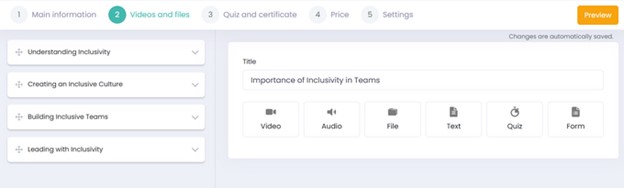
- Generate the course structure with AI
If you already have the training materials, you are ready to upload them into your LMS. With Uteach, you can offer training in different formats, such as live sessions, pre-recorded courses, blended learning, etc.
If your subject matter experts and learning experts are just building the course for your unique needs, there is an opportunity to generate the outline with the AI and edit the results. For example, here it suggests a potential course structure and topics for diversity and inclusion training.
- Offer blended learning opportunities
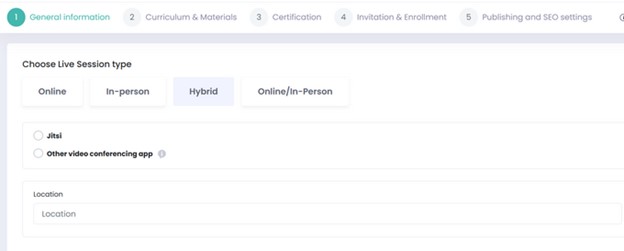
While online learning is one of the most efficient ways to train, you can still mix both online and offline formats of learning.
To do so, you can choose the Hybrid option and plan the training. Afterward, all the employees will automatically see the training schedule and join right from the platform, or the location you mentioned. If attendance is a KPI for you, you can track it automatically, too.
- Make interactive quizzes
Quizzing options on Uteach are diverse and detailed. There are 6+ answer types, and you can customize the whole quiz experience. It might be from setting the pass scores and limits to setting how your learners will see how each question appears.
Besides, there is an opportunity to add explanations to the questions or hints. So, when the answer is wrong, they are able to instantly understand why.
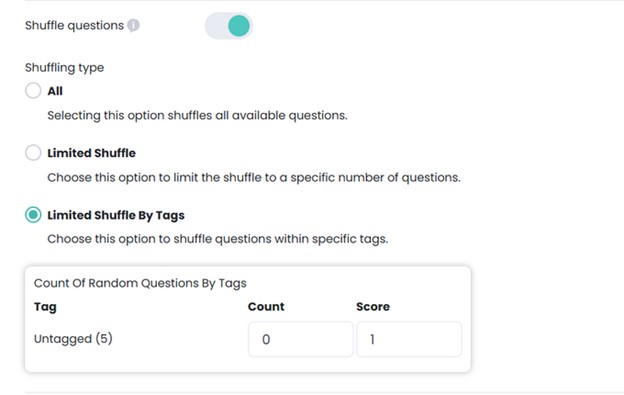
But what happens with compliance courses most of the time is that learners try to memorize the questions, especially if you give them multiple attempts to pass the quiz. To prevent this, Uteach allows you to categorize all the questions, shuffle the questions, and make the test unique each time a student passes the quiz.
- Make the training available from your mobile app
Another common challenge when running compliance training is that employees view it as a burden and something they just have to do. Yet, you can encourage them to complete the compliance training faster and make the process more enjoyable.
Research and multiple studies consistently show that smartphone or mobile learners finish their courses on average 45% faster than users accessing the same content on desktop computers.
You can make that possible with your own mobile app that Uteach develops for your organization. What is great is that you do not have to worry about maintenance, and can have a branded app for your organization’s academy.
- Certify employees upon successful completion
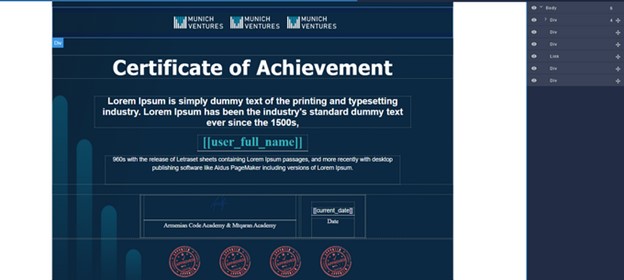
When employees successfully complete the compliance training and pass the final quiz, the system automatically awards them with certificates.
You can choose one of the designs available or create a custom certificate with our certificate builder.
Did the compliance training serve its purpose or not? You can find out how your employees performed and what results they achieved in the individual learning reports.
They show the courses and training materials per learner, their progress, quiz results, etc.
Book your free personalized demo to learn more about how Uteach supports companies and individuals to reach their compliance training goals.
FAQ
What is the purpose of compliance training?
The purpose of compliance training is to ensure that employees understand and follow the laws, regulations, and internal policies that apply to their roles. It gives them the knowledge and skills to make the right decisions, avoid violations, and handle challenging situations responsibly. Beyond meeting legal requirements, it helps create a safe, respectful, and ethical workplace environment.
What should compliance training include?
A strong compliance training program should cover both the universal topics that apply to all employees and the role-specific requirements for certain teams or industries. Universal topics often include ethics and code of conduct, workplace safety, anti-harassment policies, diversity and inclusion, and data protection. These provide a baseline understanding of acceptable behavior and key legal obligations.
In addition to the basics, compliance training should address the specific risks and regulations that apply to your industry. For example, a healthcare organization would include HIPAA privacy rules, while a financial services firm might focus on anti-money laundering requirements. The goal is to give employees clear, practical guidance they can apply directly to their work.
Also, effective training should include interactive scenarios, case studies, and examples that reflect real workplace situations. This helps employees connect the rules to their daily decisions and remember what to do when faced with a compliance challenge.
How to make employees complete the compliance training?
Getting employees to complete compliance training starts with making it relevant to their work. People are more likely to engage when they understand why the training matters, how it protects them, and how it impacts their daily tasks. Linking each topic to real scenarios they may face builds a sense of practicality rather than treating it as a box-ticking exercise.
The format of the training also plays a role. Short, focused modules, interactive content, and clear examples help hold attention better than long lectures or dense documents. Offering flexible scheduling or on-demand access allows employees to complete the training at a pace that fits their workload without causing disruption.
You can also use incentives or gamified elements to make the process more engaging.